
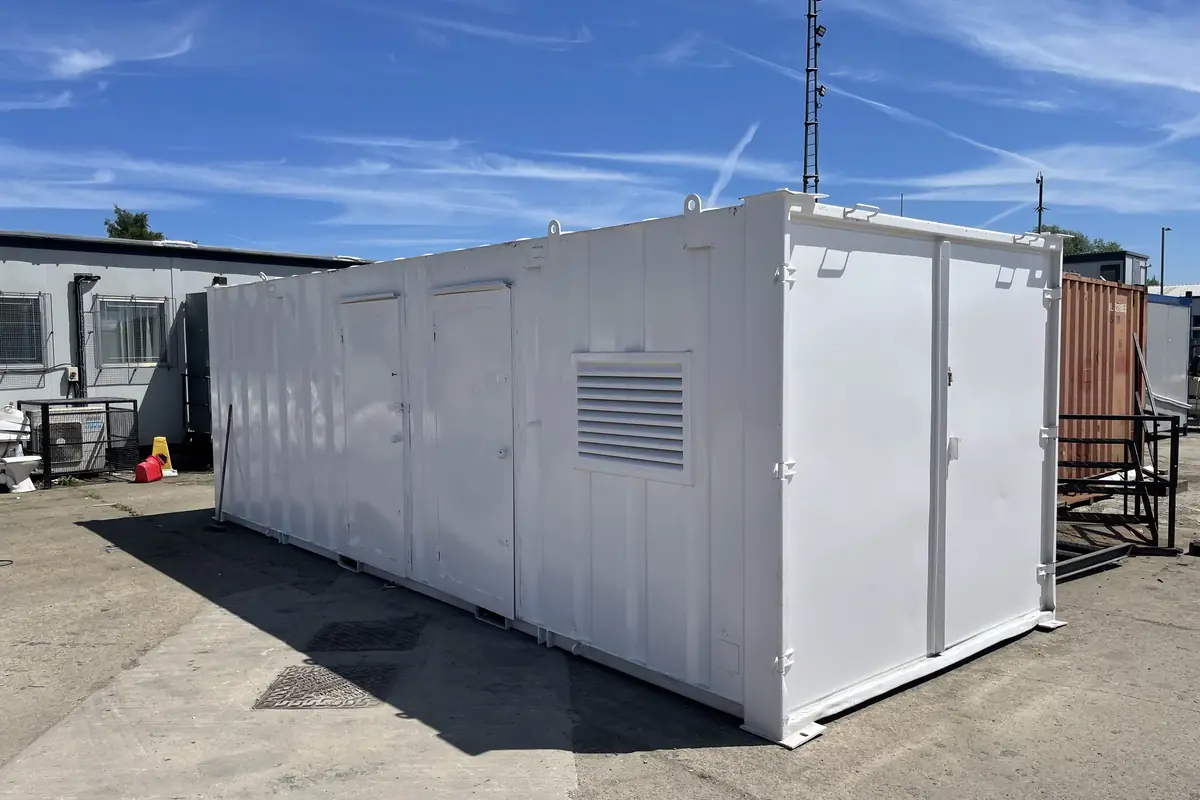
There is a particular kind of phone call that arrives in the last few weeks of a lease. The site has to be handed back clear, there are buildings on it, and somebody has just worked out that clearing them is going to cost real money at exactly the point when nobody has budgeted for it.
It is a solvable problem, and it is a much cheaper one if it is picked up early.
Where the liability usually sits
Most commercial leases require the site to be returned in a particular condition, and anything the tenant added generally has to come off. That normally includes portable and modular buildings placed on the land, even where they have been there long enough to feel permanent.
The exact position is a matter for the lease and for whoever advises you on it. What we can tell you is the practical part: the physical job of getting the buildings off, and whether they are worth anything on the way out.
Timing changes the number more than anything else
Six months out, buildings can be marketed, sold to somebody who wants that specific thing, and collected on a run that suits. Three weeks out, you are paying for whatever vehicle is available on the date the site has to be clear.
Urgency has a price and it is a real one. It is not a surcharge; it is that a job which could have travelled alongside other work has to travel alone. The single easiest way to reduce what a dilapidations clearance costs is to start it before the last month.
The buildings might be worth something
The instinct at lease end is to treat everything as a cost. Frequently some of it is not. A sound modular office, a set of anti-vandal stores, a welfare unit in reasonable order or a run of containers all have value, and that value comes off the total.
We have cleared sites where the saleable units covered the cost of removing the ones that were finished, and the client paid nothing to have the yard emptied. That is not typical, but it is common enough to be worth checking before assuming the whole thing is an expense.
What the landlord wants to see
Two things, usually: the buildings gone, and the ground left in a reasonable state. The second is worth thinking about. A building lifted off a base leaves the base, and it also leaves whatever was underneath it, which after a few years is rarely tidy.
Establish early whether the hardstanding, blocks and pads are staying or going. Buildings and their bases are different jobs, and assuming that the price for one includes the other is how disputes start.
Services are the other one. Anything running to the buildings has to be disconnected and made safe by somebody competent before removal, and the landlord may well have a view about whether cables and pipework are pulled back or capped.
How to get ahead of it
- Read what the lease actually requires, and get it confirmed rather than assumed.
- Walk the site and list what is there, including the things nobody uses any more.
- Photograph each building from two sides and note rough sizes.
- Establish what is still connected and who is disconnecting it.
- Find out whether bases and hardstanding are in scope.
- Get a figure while there is still time for it to be a planned job.
Buildings across several sites
Where a lease end involves more than one location, send them together rather than separately. Buildings coming off three sites in the same region can often be collected on planned runs, and the value on the good units at one site offsets clearance costs at another. Quoted separately, that saving disappears.
We work across England, Scotland and Wales from a Manchester yard, so a multi-site clearance is normal work rather than an exception.
If a lease is coming to an end and there are buildings on the site, send the details now rather than in the final month. The number will be better and so will your options.