
Bought outright · England, Scotland & Wales
We buy containers
Shipping containers, storage containers, site stores and converted units. Send photographs, the size and the postcode it is standing on, and you will get a figure and a collection date rather than a survey booked three weeks out.
What we take
A container standing empty is money doing nothing
Containers outlast the reason they were bought. A site finishes, a store is emptied, a yard is tidied, and the box stays where it was set down years ago. It still has a value, and that value only falls the longer it stands.
We buy them singly and in numbers, from contractors clearing a compound, from farms and yards, from schools and estates, and from people who have one sitting behind a workshop. Condition sets the figure, not the story behind it.
- Sizes
- 6ft, 8ft, 10ft, 16ft, 20ft, 24ft, 30ft, 32ft and 40ft, standard height and high cube.
- Types
- Plain storage boxes, side-opening and double-door units, lined stores, drying rooms and workshops.
- Condition
- Wind and watertight, cargo worthy, or tired and repairable. All three are bought, at different figures.
- Numbers
- One container, or a whole yard cleared in a planned sequence alongside the buildings standing next to it.
Just the one, standing in a yard or on a farm? The six photographs to send and what happens on the day are set out on sell my portable cabin.
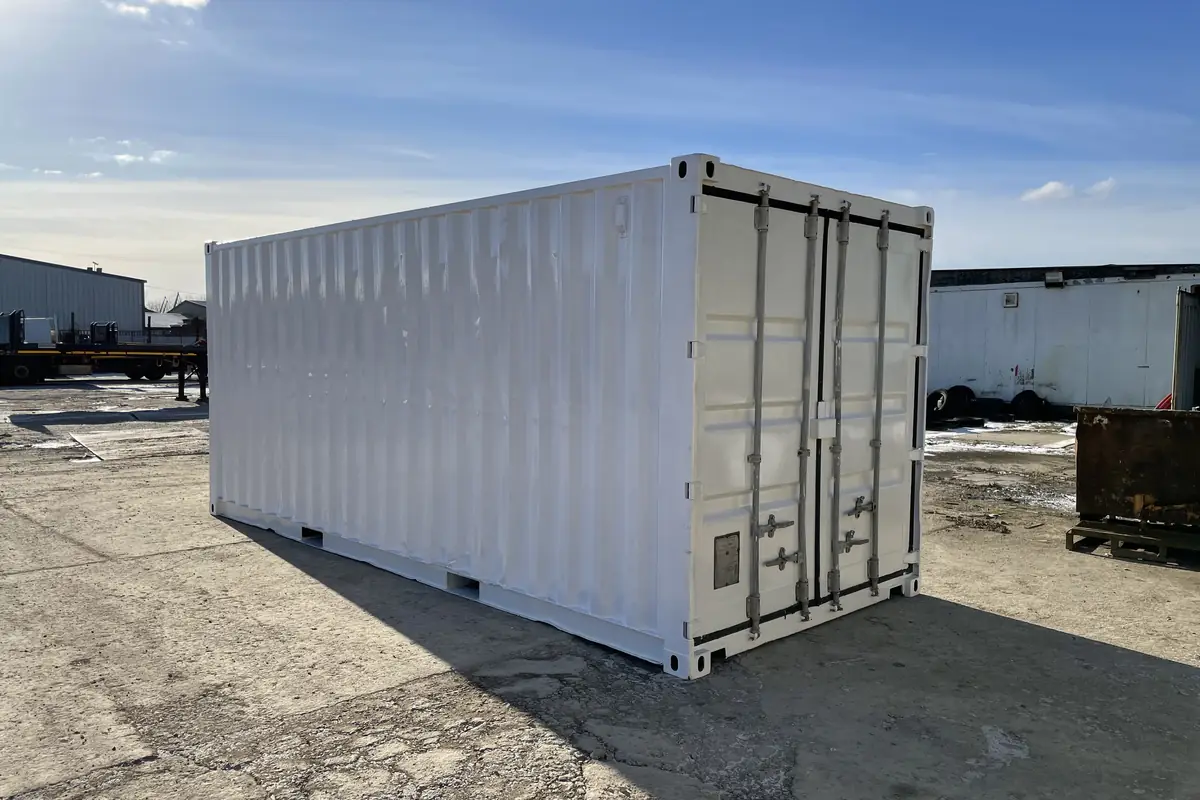
Sizes
Every length from a 6ft store to a 40ft high cube
The standard lengths are 10ft, 20ft and 40ft, and most yards are set up around them. It is the in-between sizes that people struggle to get an answer on. A 16ft, a 24ft, a 30ft or a 32ft container is bought on exactly the same terms as any other length, and priced the same way. Send photographs and the postcode it is standing on and you get a figure for it.
| Length | Approx. footprint | What we usually see |
|---|---|---|
| 6ft and 8ft | 4 to 5 sq m | Small yard stores and tool safes. Light enough that access is rarely the difficulty. |
| 10ft | 7 sq m | The size that goes where a 20ft will not. Common behind workshops and on tight yards. |
| 16ft | 12 sq m | Bought where the gateway or the plot will not take a full twenty. |
| 20ft | 15 sq m | The most traded size there is. Plain stores, drying rooms, canteens and office conversions. |
| 24ft | 18 sq m | Site stores and workshops, often with a personnel door cut into the side. |
| 30ft | 22 sq m | Comes up less often than the standard lengths. Priced on condition like any other. |
| 32ft | 24 sq m | Stores, workshops and units split by a partition part way along. |
| 40ft | 30 sq m | Standard height or high cube. The size that needs the most room to get a lorry alongside. |
Footprints are the rough external figures people work to, not a specification. A high cube is taller rather than longer, so the floor area is unchanged — useful to say at enquiry stage, because it changes what is overhead on the way out rather than what the box holds.
Side-opening, double-door and converted units in any of these lengths are bought too. If yours is an odd length or you are not sure what it is, send a photograph of it end on and we will tell you.
What decides the figure
Six things worth photographing before you enquire
Containers are easier to price from photographs than buildings are, provided the photographs are the honest ones rather than the flattering ones.
The roof
Standing water, patches and corrosion along the seams. The roof is where a container fails first and where a buyer looks first.
The doors
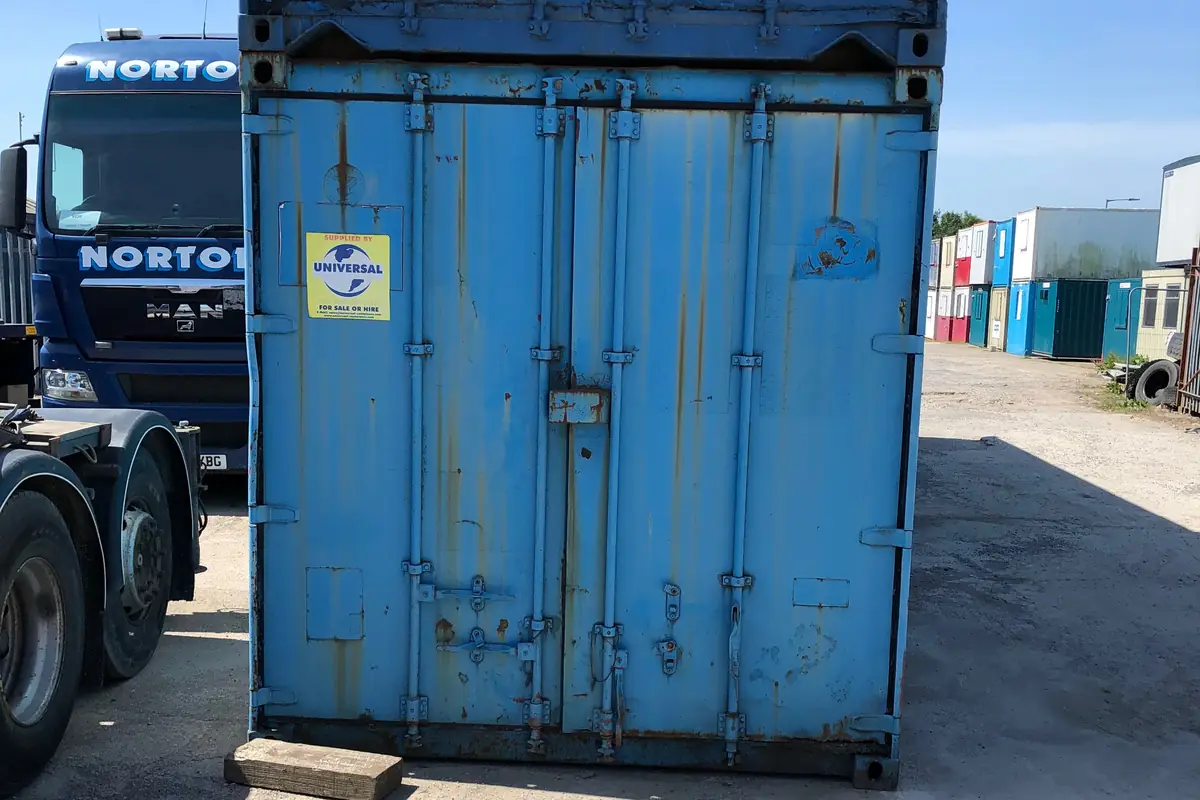
Whether they still swing, seal and lock. Dropped or sprung doors are the most common single fault and they are repairable.
The floor
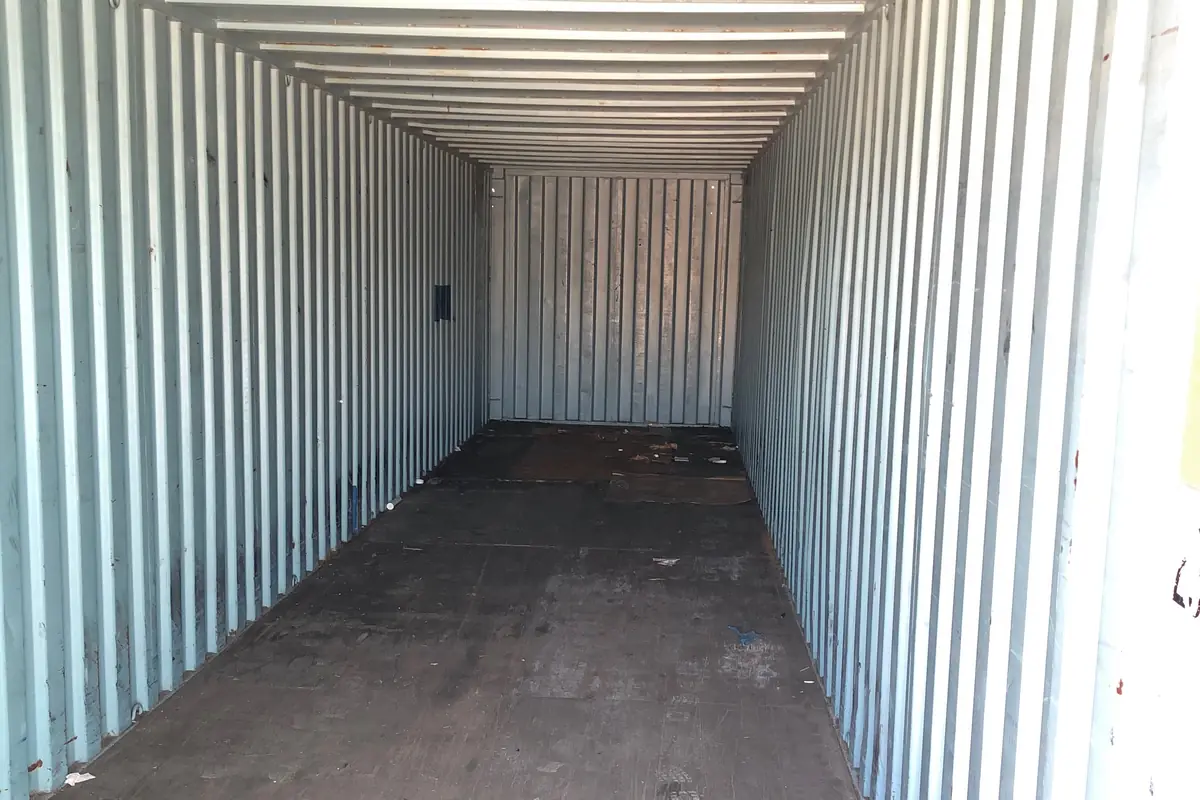
Soft patches, oil, and whether it has been lifted or replaced. Photograph it from the doorway with the doors open and the light behind you.
The corner castings
They are what the lifting equipment grips. Damaged or welded-over castings change how it has to be moved and what that costs.
Any modifications
Windows, personnel doors, partitions, linings and electrics. All of it matters, and all of it is easier to see in a photograph than to describe.
The access
The gateway, the route in, the standing position for the lorry and anything overhead. This is what an optimistic guess costs the most on.
How the collection runs
Our own vehicles, so the date is one we control rather than one we are waiting on somebody else for. What that means in practice is that the collection is planned against the rest of the week's work, and a container coming out of a yard on a run we are already making is cheaper to move than one that needs a trip of its own.
Several containers together, or containers standing alongside buildings we are already buying, almost always price better than a single unit on its own. If you are clearing a compound, send the whole picture rather than one item at a time.
Payment is by bank transfer on collection. The figure is agreed beforehand and the lorry is booked against it.
Past saving
When it is a disposal job instead
Not every container is worth buying. A unit with a collapsed roof, a rotten floor and doors that have been cut off is scrap with a haulage bill attached, and pretending otherwise helps nobody.
Where that is what you have, we will say so plainly and quote to clear it away instead. Steel is the one material in a container that always has a route, so a disposal on a container is normally a cheaper job than a disposal on a building of the same size.
Mixed yards are the normal case rather than the exception. Some containers get bought, some get taken away, and they are separated as we work through them rather than priced at the worst unit on the site.
Alongside the buildings
Most container jobs arrive with something else
Containers rarely stand on their own. If yours are sitting next to portable buildings, offices or toilet and welfare units, all of it can be handled as one job on one visit.
Sell buildings to us
Portable and modular buildings bought outright, paid for on collection, one unit or a whole compound.
How selling works →Removal
Lifting buildings and containers off their bases and taking them away, whether or not we are buying them.
How removal works →What it is worth
The things that move a figure up and down, and the ones people expect to matter but do not.
Read the valuation guide →Common questions
Containers, asked and answered
Do you take unwanted containers that have been standing for years?
Yes. Unwanted, redundant and surplus containers are most of what we buy. A box that has sat at the back of a yard since somebody stopped needing it is normal work, and standing time on its own does not stop it being worth a figure.
What sizes of container do you buy?
Anything from a 6ft or 8ft store up to a 40ft high cube, taking in 10ft, 16ft, 20ft, 24ft, 30ft and 32ft along the way. Twenty and forty foot are the two we see most and the two easiest to move, but 16ft, 24ft and 32ft units come through regularly and odd sizes are not a problem. If it fits on a lorry and it is worth something, it is worth a conversation.
Do you buy 16ft, 24ft and 32ft containers?
Yes, and 30ft as well. They come up less often than 20ft and 40ft, which is why they are harder to get a straight answer on, and it makes no difference to us. Photograph both ends along with the roof, the doors and the floor. After that it is priced like any other container, with the access to get a lorry alongside it counting for as much as the box itself.
Does it have to be wind and watertight?
No. Wind and watertight is worth more, because it can be resold as a working store rather than repaired first. Containers with a holed roof, sprung doors or a soft floor are still bought, at a lower figure, and we will tell you which of the two you have rather than leaving you to guess.
Will you take a container that has been converted?
Usually. Containers cut about for offices, canteens, drying rooms and workshops are common and we handle them regularly. Windows, doors, partitions and linings all reduce what it can be resold as, so a converted unit is normally worth less than a plain box of the same age. It is still worth more standing on your yard than it is as a disposal bill.
Do I need to empty it first?
Yes. It needs to be clear, swept out and unlocked or accompanied by the keys. We cannot lift a loaded container safely and we cannot take responsibility for what is inside it. If clearing the contents is the problem rather than the container, say so when you enquire and we will tell you whether we can help.
How do you get it out?
On our own transport, using our own HIAB where the ground and the overhead clearance allow it, or a tilt bed where they do not. What we need to know first is the access: the route in, where the vehicle can stand, what is overhead and what the ground will carry when it is loaded.
How are we paid?
Bank transfer on collection, unless something else is agreed in writing beforehand. The figure is settled before the lorry is booked, not renegotiated on your yard.
Do you sell containers as well as buy them?
Much of what we handle is resold once it has been checked over and put right, so yes. Describe what you need and the size you are after and we will tell you what we can supply and what condition it is in. What is standing in the yard changes from week to week.
Got a container standing idle?
Photographs, the size and the postcode it is standing on. That is enough for a figure, and the figure is what you are paid on collection.