
Sell my portable cabin
Sell your cabin, one unit or a compound
One cabin or container, standing in a yard, on a farm or behind a workshop, and you would rather have the space and the money than the building. This page is about that. It is a short conversation and it starts with a handful of photographs.
Getting a figure
There is no form to work through and no valuation process to book. Send us photographs, roughly how big the cabin is, the postcode it is standing on and a sentence about what state it is in. Most single cabins and containers get an answer the same working day.
That answer is one of three things. Either an indicative figure and what it depends on, or a request for another photograph or two because the building is bigger or more joined-up than the pictures suggest, or an honest explanation that it is not one for us. All three are useful, and none of them takes much of your time.
If you do not know the make, the age or what system it is, that is fine and it is very common. There is often a plate or a sticker inside a door frame or on the chassis rail. Photograph it if you find one. If there is nothing there, we work from what the cabin is made of and what condition it is in, which is what actually drives the number anyway.
The postcode matters more than people expect. Where a cabin stands, and what the last hundred metres of the journey look like, affects what it costs to get it out. A cabin tucked behind two others with a narrow gateway is a different job from one standing in an open yard, even when the buildings are identical.
The photographs
Send the pictures you have
A phone camera is fine and two or three photographs are enough to get a figure started. The six below are simply the ones that answer the most questions, so if you are walking out to the cabin anyway they are worth getting. If you cannot get all of them, send what you have and we will ask for anything else we need.
-
One corner, then the opposite corner
Stand back at a corner so two elevations are in the same shot, then walk round and do the same from the corner diagonally opposite. Two photographs, all four sides covered, and the proportions of the cabin visible.
-
The roof
The single most useful photograph and the one people leave out. From an upstairs window, a bank, or anywhere safe and higher than the cabin. Do not climb on it. Roof condition drives value more than anything else does.
-
The inside, end to end
Stand in one corner inside and shoot down the length, so the floor, the walls and the ceiling line are all in the frame. If it is partitioned, one shot per room. Water staining on a ceiling shows up clearly in these.
-
The doors, and any joint between units
On a container, the doors and the seals around them, because a door that has dropped is a job. On a cabin made of two or more sections joined together, photograph the joint inside and out, floor to ceiling.
-
The corners and lifting points
Close shots of each corner post at the base, and of the lifting eyes, brackets or castings if you can see them. Dented posts and pulled lifting points change the method, so we would rather know before the lorry is booked.
-
The way in
One from the road looking towards the cabin, showing the gateway, the ground the lorry has to stand on and any overhead cables. This is the photograph that stops a collection date being wasted.
Close shots of any damage help too — impact dents, corroded corners, missing panels, broken glazing, soft spots in the floor. More photographs are better than fewer, none of them need to be flattering, and a short enquiry with two pictures is far better than no enquiry at all.
Be straight about the damage
The temptation is to photograph the good side. It never pays off. A figure given on flattering photographs gets revised when the driver arrives and sees the rest, and then everybody has wasted a day and the conversation starts again on a worse footing.
Tell us about the roof leak that was patched, the corner the telehandler caught, the floor that gives slightly by the door, the winter it stood in standing water. None of that necessarily stops us buying. It gets priced in, and then the figure we give you is the figure that stands on the day.
Cabins and containers first
Single cabins, site offices, anti-vandal units, welfare units and shipping containers are the buildings we most want, one at a time or a yard full of them. Containers have their own page at we buy containers, and so do toilet and shower blocks. It is the same short conversation either way.
A larger multi-bay block is a longer conversation, with a dismantling sequence to plan around your dates, but it starts the same way with photographs. That route starts at sell modular buildings. Clearing a mixed compound rather than a single building? See sell portable buildings.
If we do not want it
We do not take every cabin. Condition decides, and sometimes the honest answer is that there is nothing there worth buying. We will tell you that plainly rather than making an offer so low it is really a refusal.
That is not the end of it though. A building we will not buy is usually still a building we can take away, and that is a separate arrangement from a purchase. It costs money rather than paying you, but it clears the ground and it is generally cheaper and tidier than the alternatives.
- Portable building removal — lifting it off its base and taking it away, whether or not we are buying it.
- Modular building disposal — end-of-life buildings dismantled and separated properly.
- What we take — the criteria, in plain terms, before you spend time enquiring.
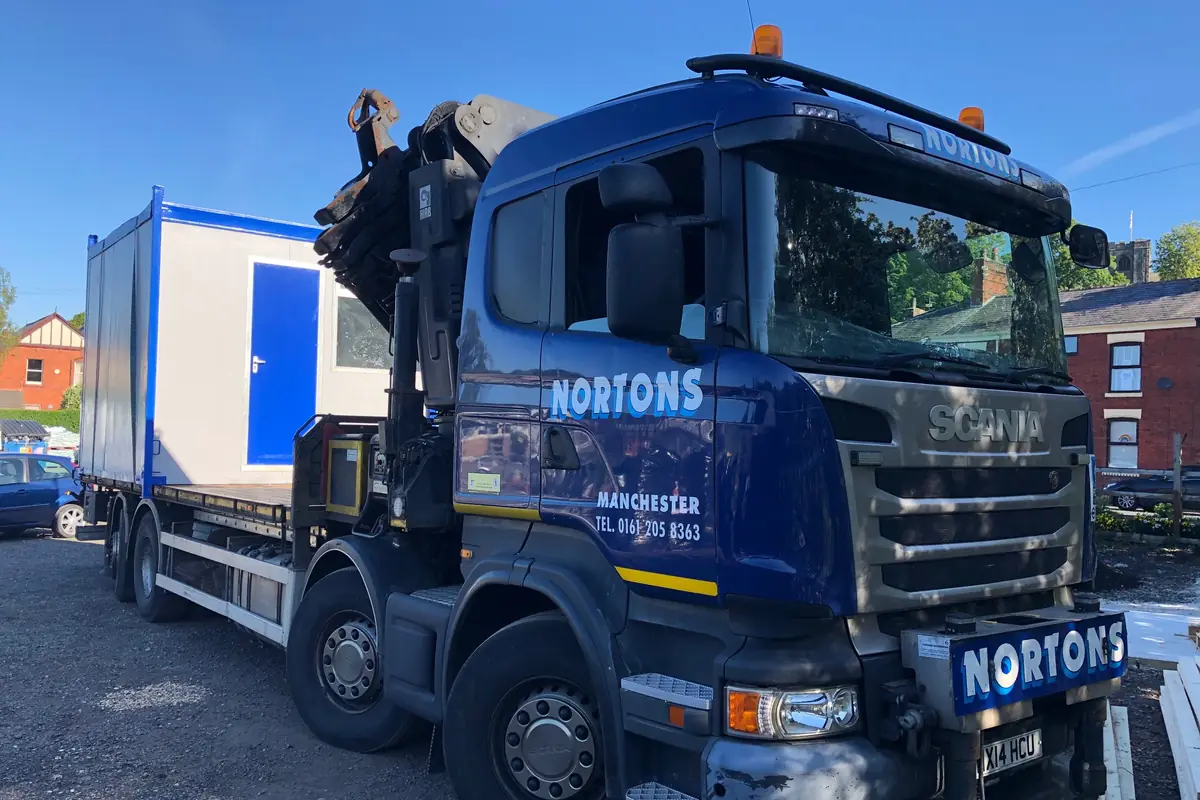
We run our own transport across England, Scotland and Wales, so the collection date is one we control rather than one we are waiting on a haulier for. More on that under nationwide collection.
Collection day
What actually happens
Straightforward, provided the cabin is ready. How long a collection takes depends on the access, the lift and what is still attached, so we do not put a figure on it in advance.
Have this done before we arrive
- The cabin emptied completely — furniture, tools, stock, paperwork and rubbish all out.
- Power isolated and disconnected, and anything hard-wired made safe by a competent person.
- Water off and drained down, and any waste connection disconnected and capped.
- Vehicles, pallets, skips and stacked material moved clear of the cabin and the access route.
- Somebody on site who can open up, sign for the collection and point out anything we should know.
- Gates unlocked, and any keyholder or neighbour arrangement sorted out in advance.
On the day
The driver walks the access route first and confirms where the lorry can stand. The cabin is checked against the photographs and the description, which takes a few minutes. If it matches, nothing changes and the price is the price.
It is then lifted clear of its base, set on the trailer, strapped and taken away. We do not need heavy machinery from you and we do not need a groundworker. What is left behind is the base, any foundations and whatever the cabin was standing on.
Payment is by bank transfer on collection, unless something different was agreed in writing beforehand. You will know the figure and the arrangement before the date is booked.
Send photographs and get a figure
Buying rather than selling? We also have used cabins for sale and used site cabins.
Common questions
Selling one cabin
How do I get a price for my cabin?
Send photographs, the rough dimensions and the postcode it is standing on, with a line about its condition. That is genuinely all we need to start. Most single cabins and containers get an answer the same working day, either an indicative figure or a straight explanation of why it is not one for us. On joined or stacked buildings we sometimes come back and ask for another photograph or two.
Do I need to know the manufacturer or the age?
It helps but it is not essential. Plenty of people inherit a cabin with a yard or a farm and know nothing about it. There is often a plate or a sticker inside a door or on the chassis, and a photograph of that tells us more than an estimate would. If there is nothing, we work from the construction and the condition instead.
What if the cabin is in poor condition?
Say so and send photographs of the worst of it. Condition decides whether we buy, and we would far rather price a tired cabin accurately at the start than turn up expecting something else. A building we cannot buy is not a dead end either, because we can usually still quote to take it away, which is a separate arrangement from buying it.
Do you buy shipping containers as well as cabins?
Yes, and they are among the things we most want. Stores, site containers and converted units in any size, one of them or a compound. Doors that still swing, a sound floor and a roof that has not been standing in water are what decide the figure. The containers page covers what we look for and what we will not take.
Does the cabin have to be empty?
Yes, completely, and services need disconnecting before we arrive. Furniture, tools, stock and rubbish all have to come out. Power isolated and disconnected, water off and drained down, waste disconnected, anything hard-wired made safe by a competent person. A cabin that is not ready on the day means a wasted journey and a new date.
How and when do I get paid?
Bank transfer on collection, unless something different is agreed in writing beforehand. You will know the figure and the arrangement before the lorry is booked, so there are no surprises on the day. We confirm it in writing rather than leaving it as a conversation on the phone.
Do you cover my area?
England, Scotland and Wales. We are based in Manchester and run our own transport rather than subcontracting haulage, so distance affects what it costs to move something rather than whether we will do it. Rural yards, farm tracks and cabins tucked behind other buildings are all routine, and the last hundred metres of the journey matters far more than the first two hundred miles.
Send a few photographs and a postcode
That is enough for a figure on most single cabins and containers, usually the same working day. If it is not one for us we will say so, and quote to remove it instead.