
Sell portable buildings
For contractors, fleet operators and organisations clearing anything from a single unit to a full compound. We buy direct, run our own transport, and settle the whole batch in one arrangement instead of piecing it out to a dozen buyers.
Fleets and compounds
One buyer, one settlement, one programme
Selling buildings individually looks like it maximises the return. In practice it fills your yard with viewings, produces four buyers who each want the two best units, and leaves you with the remainder and a disposal bill you had not budgeted for.
Buying the batch whole solves that. We take the good, the middling and the tired in the same transaction, price them as a lot, and clear the ground. You deal with one company, one point of contact and one set of paperwork.
- Who we buy from
- Main contractors, fleet operators, schools and academy trusts, NHS estates, local authorities, farms and private individuals.
- Batch size
- From one unit in a corner of a yard to an entire compound released over several months.
- Condition
- Mixed is expected. Sound, refurbishable, part-worn and end-of-life can all sit in the same offer.
- Transport
- Our own vehicles across England, Scotland and Wales. Not subcontracted haulage, so the date is one we control.
- Payment
- On collection, or at the end of each phase on a staged clearance, unless agreed otherwise in writing.
The process
How a fleet or compound disposal runs
Nothing here is complicated, but the order matters. Getting the schedule and photographs right at step one is what keeps steps four and five from slipping.
-
Send a schedule
A simple list is enough: unit reference, approximate size, what each one is fitted out as, and a note on anything obviously damaged. A spreadsheet is ideal. A photograph of a handwritten list works too.
-
Send photographs
Whatever you can get to easily. Two external elevations from opposite corners and one interior shot per building is ideal, but a handful across the batch is enough to start and we will ask for more where we need them.
-
We come back with an outline
Normally the same working day for a small batch. An indicative figure for the lot, what we would buy, what would be a removal cost, and anything we still need a picture of.
-
The access questions
Ground conditions, overhead cables, gateway widths and what can be lifted from where get worked out from the photographs and a short conversation before a firm offer is made.
-
Firm offer and programme
A written figure against the schedule, with the collection sequence set out phase by phase and tied to your handover dates. If your programme moves, the sequence moves with it.
-
Collection and settlement
Our transport, our lifting arrangements, your services disconnected in advance. Payment on collection, or at the end of each phase where the clearance is staged.
Getting a useful figure first time
What to photograph
The quality of the first figure we give you depends almost entirely on the photographs. These are what make the difference between an indicative range and something you can take to a decision meeting.
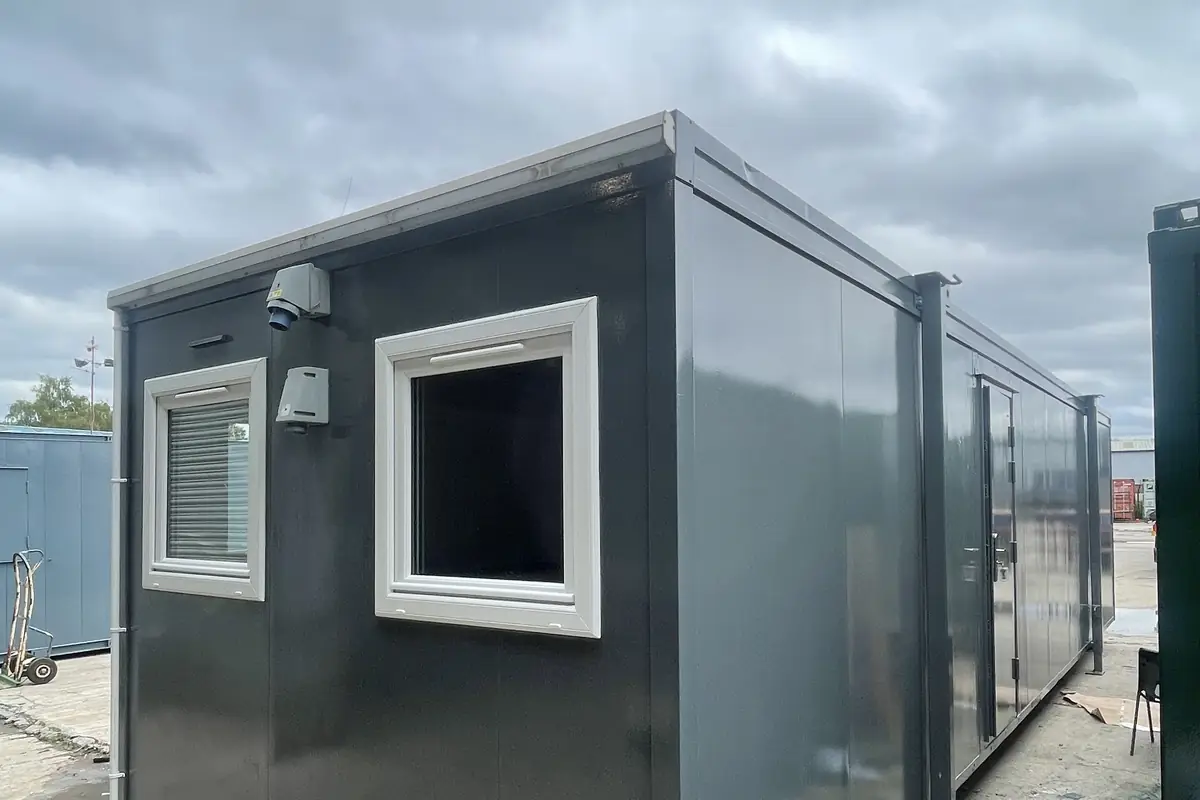
- Two external shots per unit, taken from opposite corners so all four elevations are covered.
- The roof, from a height if there is anything to stand on safely. Roof condition drives value more than anything else.
- One interior shot along the length of the building, showing the floor and the ceiling line.
- Close shots of damage — impact dents, corroded corners, water staining, missing panels.
- The compound as a whole, showing how tightly the units are packed and what stands between them and the gate.
- The access route in, including the gateway, any overhead cables and the ground the lorry has to stand on.
Do not tidy up the photographs. A batch that looks better in pictures than it does in the yard produces an offer that gets revised downwards on collection day, which wastes a fortnight of your programme. Photograph the tired ones honestly and the figure you are given is the figure that stands.
The same applies to what you tell us about history. A unit that has stood on soft ground for three years, or one that was flooded, or one with a roof leak somebody has patched twice, is not a problem — it is information that gets priced in properly at the start.
If you are not sure which units are worth selling and which are a disposal job, that is a normal question and we answer it as part of the offer. Read what we take for the criteria, or how a valuation is put together for what drives the number.
Other routes
If selling is not the answer
Buying a building pays you. Removing one costs you. Most compound clearances involve both, and it is worth knowing which units fall where before the budget is set.
Removal
Lifting buildings off their bases and taking them away, whether or not we are buying them. One unit or a full compound.
How removal works →Disposal
End-of-life buildings dismantled and separated, with steel, boards and linings, glazing and electricals handled as they should be.
How disposal works →Modular blocks
Multi-bay blocks on school, health and local authority estates, priced from photographs with a dismantling sequence planned around your dates.
Read the detail →One building rather than a fleet? Selling a single cabin or container is a shorter conversation. Wondering about coverage? See nationwide collection.
By type of unit: site cabins and site offices · jackleg cabins · anti-vandal units · welfare units and canteens · toilet and shower blocks · sleeper units and sleepouts.
Buying rather than selling? We also have used cabins for sale and second hand portable buildings.
Common questions
Fleet and compound disposals
Do we have to sell the whole batch at once?
No, and it is often better not to. Where a compound is being wound down over months, we buy in phases that follow your programme. Each phase is priced and settled on its own, so nothing is held back waiting for the last unit to be released. What we ask for early is the outline programme, so transport can be planned rather than improvised.
What if the units are in very different condition?
That is normal on any fleet disposal and it does not stop us buying. Some units will be worth refurbishing, some will be worth stripping for parts, and some will be a straight removal cost. We price the batch with all three in it and give you one figure, which is usually better than selling the good ones and being left holding the rest.
How quickly can a compound be cleared?
It depends on the number of units, the access and how much of the site can be released at once. A handful of buildings from an open yard can be a single day. A large compound with restricted access and a live operation alongside it is planned across several visits. We give you a realistic sequence at the point of offer, not an optimistic one.
Who is responsible for disconnecting services?
You are, and it needs doing before we arrive. Power isolated and disconnected, water off and drained down, waste disconnected, and anything hard-wired made safe by a competent person. We will not cut live services. If disconnection has not happened on the day, the visit gets rescheduled and that costs everyone time.
When and how is payment made?
On collection, unless something different is agreed in writing beforehand. For phased clearances that means settlement at the end of each phase rather than one payment at the very end. We will confirm the arrangement in writing with the offer so there is no ambiguity about what is being paid, when, and for which units.
Do you buy buildings that are not worth anything?
We will still quote to take them away, but that is a removal job rather than a purchase and it costs you money instead of paying you. On mixed batches the two frequently offset each other. Where the whole lot is at end of life, the honest answer is a disposal price, and we will give you that rather than string the conversation out.
Send the schedule and we will price the lot
Unit list, photographs, the site postcode and your handover dates. You get an outline figure quickly and a firm written offer once we have seen the compound.